


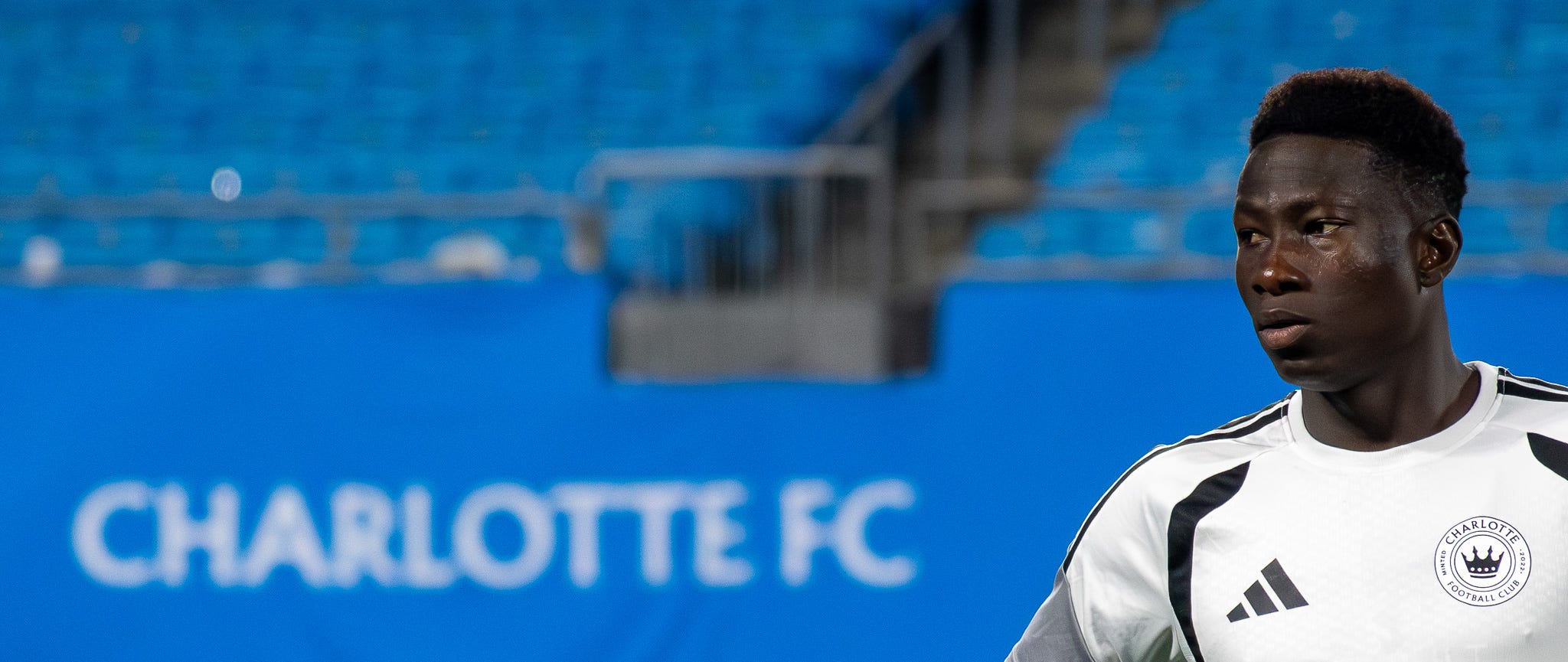
As Charlotte FC return to the pitch at the conclusion of the World Cup, we caught up with forward Rodolfo Aloko, the 19-year-old Benin international whose rise to Charlotte FC’s first team is one of the most compelling storylines of the Crown’s fifth season.
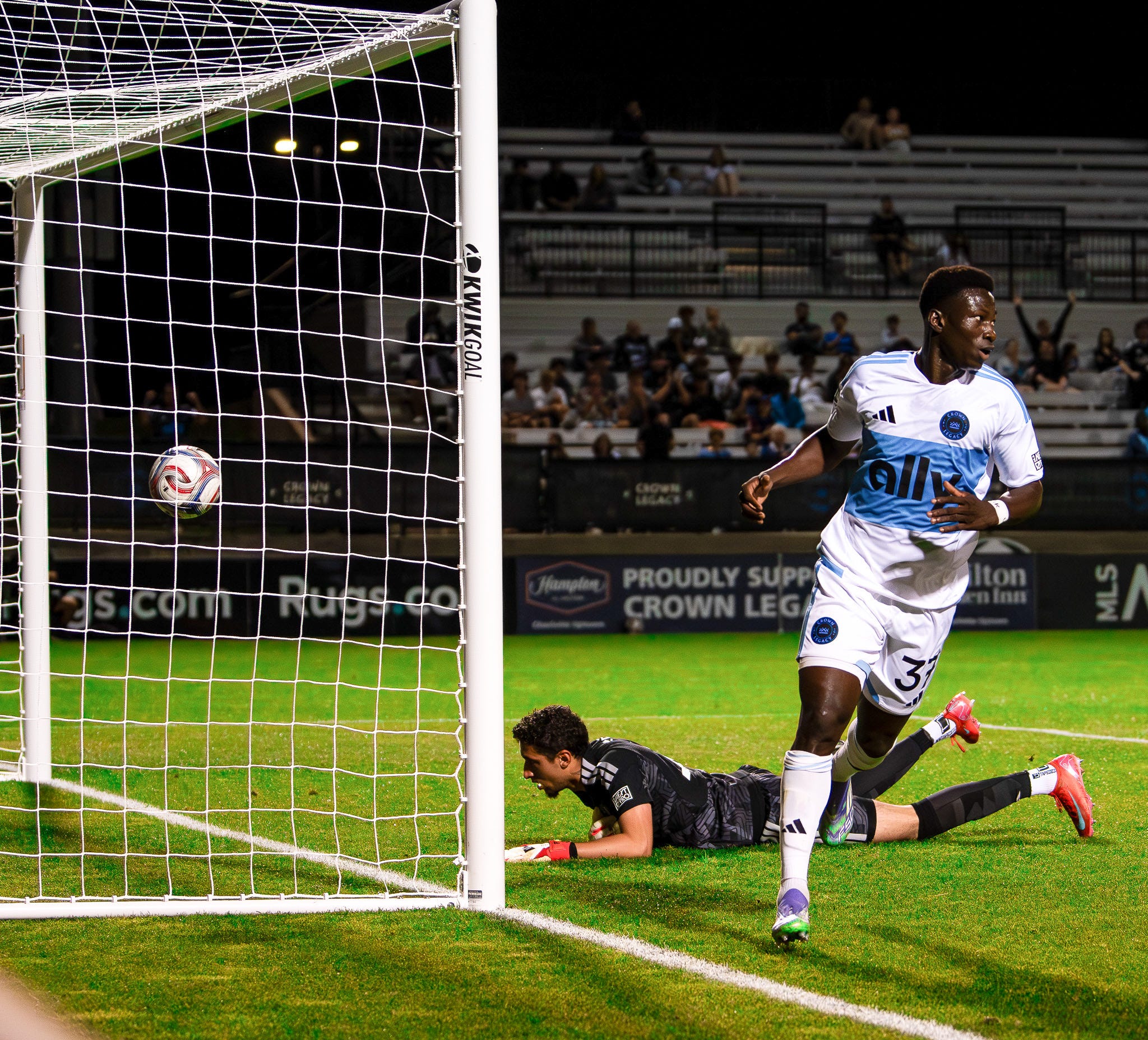
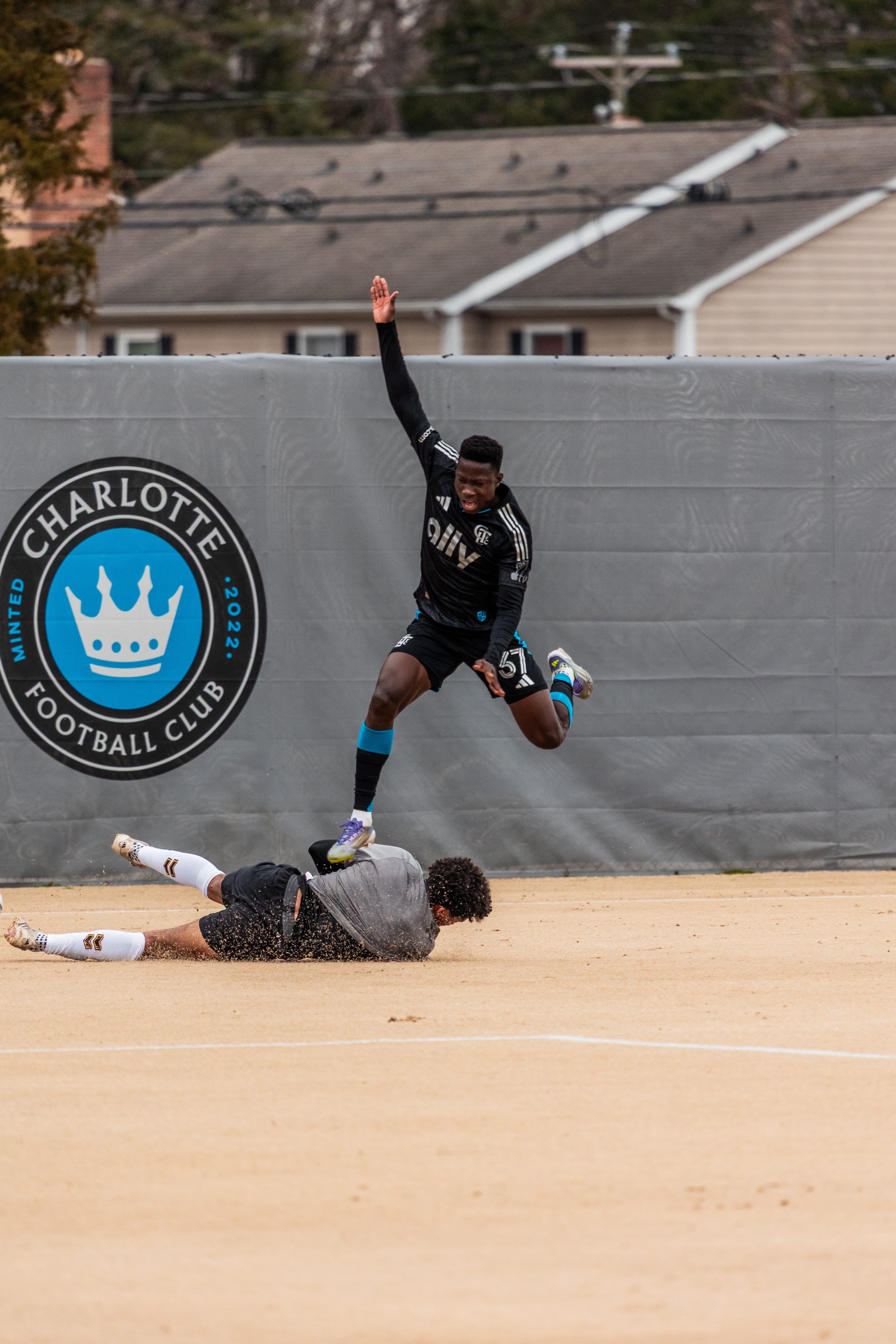
Aloko started the season with Crown Legacy FC, Charlotte FC’s second team, where he was the MLS NEXT Pro Player of the Month for March. While he only played 6 NEXT Pro matches before joining the first team on a regular basis, his 8 goals are still enough that he’s tied for 7th in goals scored this year, even as most NEXT Pro players have played 13-17 games at this point.
Now, as a regular in MLS, the competition is stiffer.
“[MLS is] a very high level,” Aloko told Soccer Sheet. “In Croatia, I played in Division 3, so it wasn’t the same level. MLS is the best. I have played several times, and I could feel that it’s very high level. I think in the next few years, it’s going to get even better, because the players that are coming to the league, and the players that are here, it’s a very high level.”
Soccer Sheet’s Adrian Singerman sat down with Aloko for a wide-ranging interview in about his story, the country of Benin, and what it’s been like to move to the highest level of domestic soccer. The full interview transcript, translated from French, and video are below.
Aloko and Charlotte FC return to Bank of America Stadium on Wednesday, July 22, facing I-85 rivals Atlanta United.
Rodolfo Aloko: The Soccer Sheet Interview
Editor’s Note: The below interview is translated from the original French, and edited for clarity.
Soccer Sheet: You were born and grew up in Bénin- what was it like growing up? What memories do you have of your childhood?
Rodolfo Aloko: I grew up in Benin, I did everything in Benin. I left Benin, not even 5 years ago, I think. In Benin, everything was good. I had a good childhood and everything. I was very very young, I would have been happy to be where I am today. It was a dream, a big dream. It’s a real pleasure. So I’m very happy about that.
SS: We don’t hear much about Benin in the media here in the U.S. What would you want people who don’t know much about Benin to know about your country? What can you tell us about your hometown Sô-Ava?
RA: First of all, Benin is a beautiful country. Nowadays, a lot of people go to Benin for the tourism and everything, because the culture is the most important thing in our culture. I think there are a lot of people in Europe, and especially France, who come to Benin to discover what the country is like. And that’s good. I feel like our culture is top notch.
I was born in Sô-Ava, but I’m from the North, actually. I’ve never been there, but my dad comes from there. People say our culture is similar to Nigeria. We speak a language that is similar to Yoruba. It’s a beautiful city.
SS: Have you visited the Royal Palaces of Abomey?
RA: Yes, I played in Abomey. Yes, I visited the Palace. It’s really magnificent. I did around two or three years in Abomey, where I started my life of soccer, I would say, at a high level. It was really impressive. I really loved it. The population, and everybody, I really enjoyed it. I really enjoyed learning new things. Because before that, it wasn’t the same. Basically around the whole city, they talk about the Kings. There’s the Kingdom.
SS: How are the people connected to the historical Kingdom of Dahomey?
RA: Yeah, I think it’s stayed the same because, we want to support what is good. We have the King Béhanzin who has really done a lot for the country. I don’t know too much about the history, but I also like to do research on this information, because I am a son of the country. I really like information, finding out what happened in years past, I really enjoy that, and I think when I have some vacation, I will go back there again, to learn more about the history. I would really enjoy that.
SS: Do you have the chance to go back there (Bénin) regularly?
RA: I think during vacation, I think I can try.
“I would just say that, may God be with me, that injuries stay far away. That’s the main problem for a soccer player. You just have to pray for that not to happen.” - Rodolfo Aloko
SS: During the World Cup?
RA: I think I have to go to the national team then. So I’ll see if I can go after, or if I can’t go, then maybe next season, by the grace of God.
SS: When did you become interested in soccer? Who were your influences as a child?
Everything started when I was 7 years old, 6 years old. I already loved soccer. I don’t even know how I started thinking about it. I really loved soccer, because when you’re young, maybe you see your big brothers playing, and you say to yourself, ‘what are those guys doing?’ I asked myself a lot of questions.
When I started, it was a day, I think, there was a coach who was coaching us. He was new, and he came. He said he wanted to form a team of kids, of little kids to make them better. We were in the neighborhood, we just wanted to play. So, we started, and he was also a soccer player. He was already at a high level, he played at another center [for training]. He also sent us over to where he played. There were also kids over there, so they needed kids to play against. We weren’t ready to play against the big kids yet, you see, so he sent us over there for more training. When we got there, they took us in with open arms. That’s my training center.
They trained us even more when we were 8, 9 years old. We continued to improve. When I was 10, I was even playing with the big kids. We weren’t scared any more. They taught us how to play with the big kids, so we weren’t scared any more. We came to JSK, and everything started there. Then I left, because my coach brought me directly to Abomey.
SS: When did you become interested in pursuing soccer as a profession?
RA: First of all, I would say, I’ve always wanted to play at the highest level, because when you play and you watch TV, you tell yourself, I want to get to that level. In our country, when you look around yourself, there were no older players that had signed with a big club, but it was hard. But I had courage. We had plenty of young players. Of course we want to sign with a big club. But I would say it was when I was between the ages of 12, 13 years old, I told myself, year, I need to play pro. It was at that moment that I already felt like, I can do something. I felt like I was progressing more than the others at a young age.
SS: You started your professional career in Benin with Dynamo Abomey FC before moving on to a Croatian club, NK Kustosija. What were those experiences like for you? What was it like getting your first professional experience at such a young age?
RA: It was very hard. When I left Dynamo Abomey, I came to Croatia. That was a period where I spent basically a year and a half without playing. I just trained. There was a rule there, a protocol that said, when you’re young, and you come, you’re not 18 yet, you can’t play.
So it was a little hard, it was really hard, I did a year and a half without playing. But I stayed focused. I told myself, it will be ok. Then, I started to play. Charlotte had come to Croatia to play a tournament. Crown Legacy came to play a tournament. So I participated with them. And from there, they wanted me, so I came here. I’m very happy.
SS: In Zagreb, were you friends with Razack Rachidou, who is also from Benin?
RA: Yes, he’s a teammate on the national team. Yeah, we’re friends, we get along and everything. He’s a brother of mine, yeah.
Video: Rodolfo Aloko Speaks with Jorge Torres in a Post-Match Interview
SS: Over the last several months, you had five very productive games with Crown Legacy, scoring eight goals. How has your experience been with Crown Legacy?
RA: I would say this club has done a lot for me, they’ve helped me progress a lot. I’ve always wanted to continue learning and improving. To get to the highest level, you have to keep doing the same thing, keep giving your all. I have partners who are joining me in that effort. I’m very happy. I’m just continuing with my quality as a soccer player, and I think it’s been fruitful. I just have to keep going like this. Even with the first team, I need to keep working, and it will come.
SS: How would you evaluate first games with Charlotte FC?
RA: My first match was in the [Lamar Hunt U.S. Open] Cup, I think. I had two assists. It was good for me. It gave me a lot more confidence. Which allowed me, once I got to the top level, it was easier for me. I would just say that, may God be with me, that injuries stay far away. That’s the main problem for a soccer player. You just have to pray for that not to happen. We give grace to God, it’ll be ok.
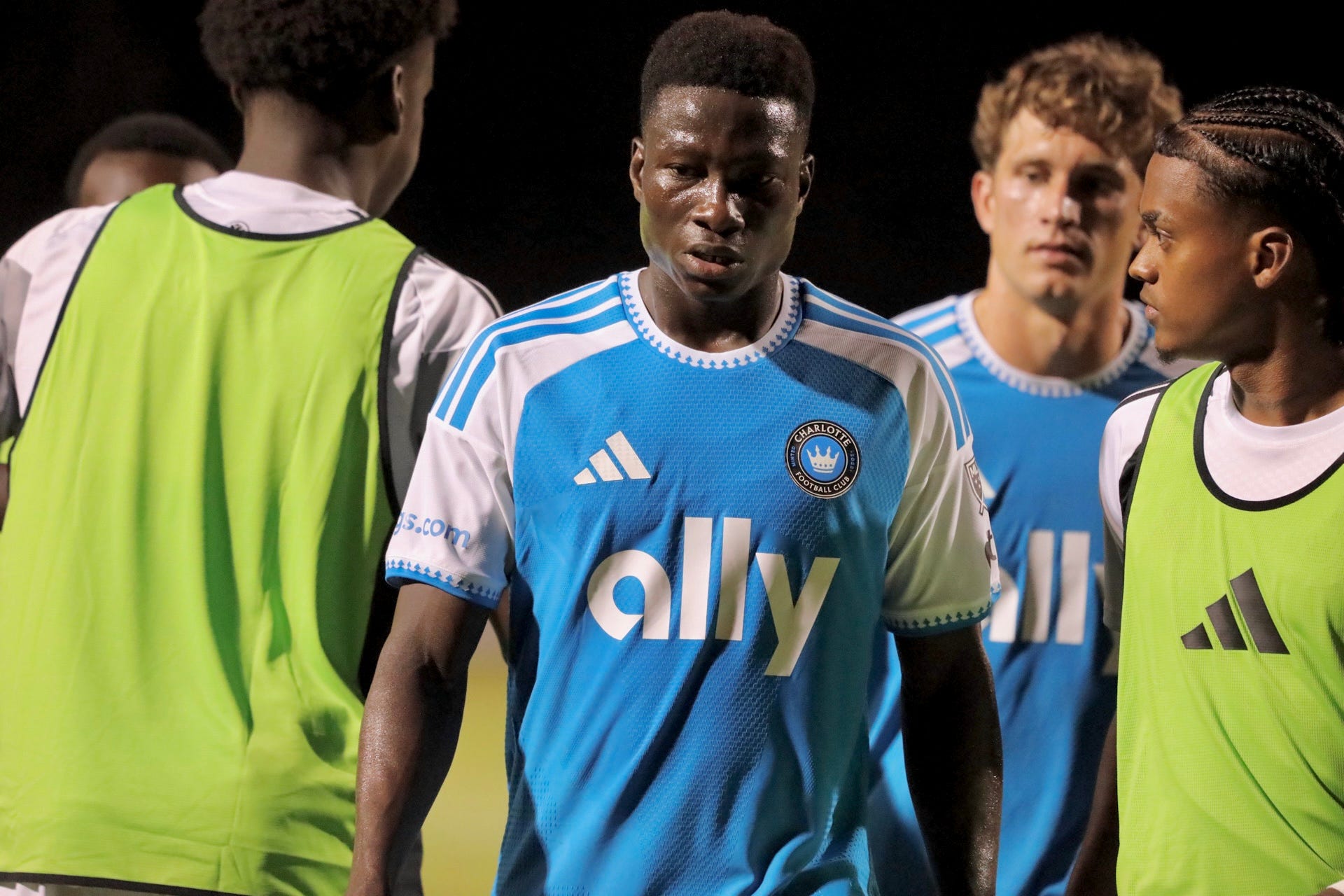
SS: How much of a step up is the MLS compared to the other leagues you have played in?
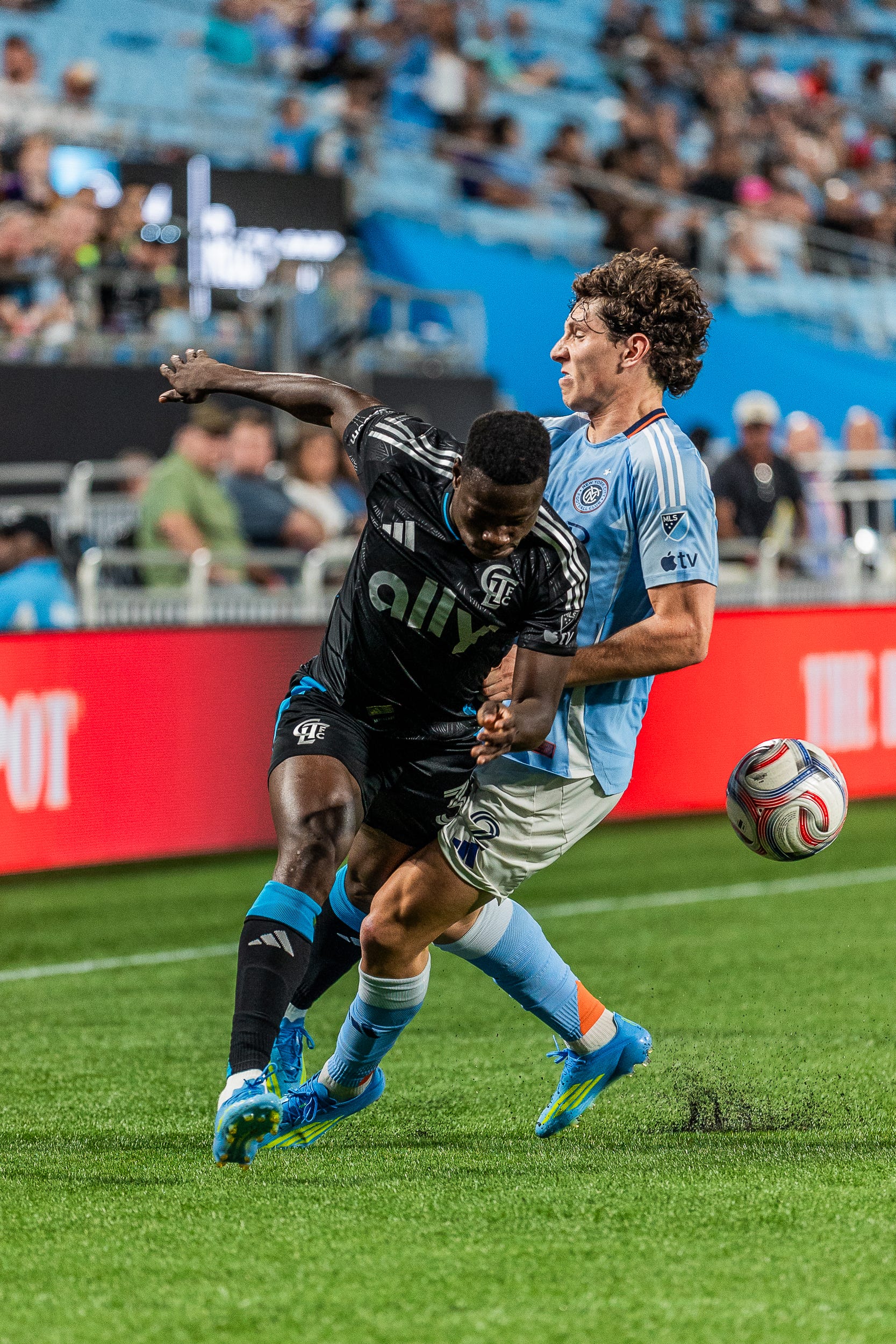
RA: It’s a very high level. In Croatia, I played in D3, so it wasn’t the same level. MLS is the best. I have played several times, and I could feel that it’s very high level. I think in the next few years, it’s going to get even better, because the players that are coming to the league, and the players that are here, it’s a very high level.
SS: It’s been an up and down start to year for Charlotte FC. How has the mood been in the locker room?
RA: Indeed. There’s a lot of joy in the locker room. With Wilf, with Diani, everyone is always joyful. They give me advice. Almost everyone gives me advice. That allows me to be really connected to the group. I’m really thrilled to be here. For me, what counts is continuing to improve.
SS: You’ve also played for the Benin national team, both U-20 and the senior team. What has it meant to you to play for your national team?
RA: It’s a big joy, a big point of pride to wear the uniform of the country. It’s really significant. And it’s just a dream for me, because I always wanted to give my all, to give something more to my nation. At any time that my nation calls on me and I have the opportunity, I’ll be there. It’s a very big point of pride. Among so many young players, to be called upon, that’s what you do. It’s a good thing, and you have to keep doing it. Keep working, keep giving you all, and it’ll be ok.
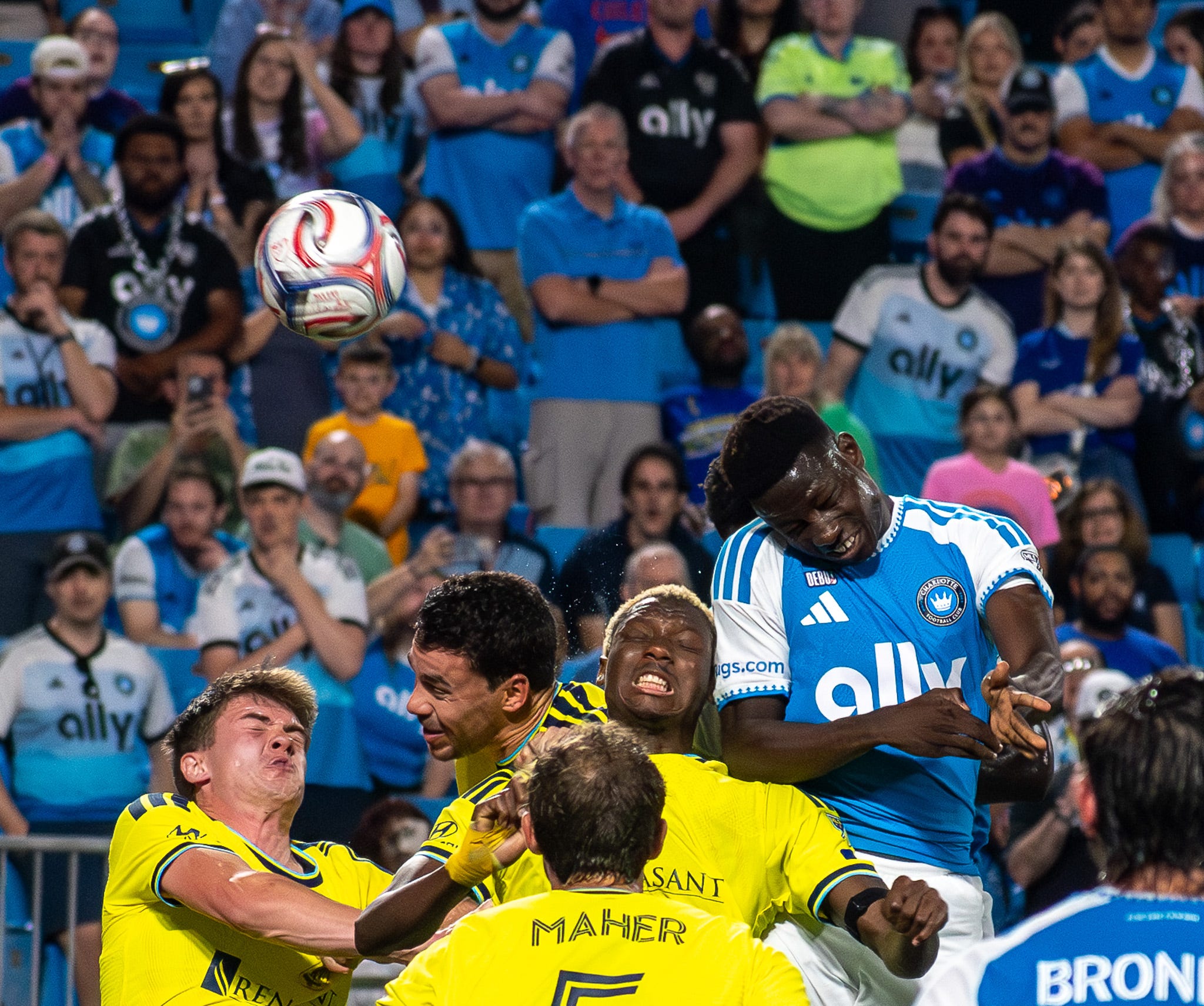
SS: How have you been adapting to life in the U.S.? What things stand out to you about American culture?
RA: I adapt to each country. Everywhere I go. So I’ve never had a problem with that. I have the mentality for each challenge. Whatever is going on in the country, you have to adapt. It can take time, but you have to adapt. You have no choice but to stay alert, to stay focused. Because soccer is what brought me here. I don’t have too much time to go out. But sometimes I go out a little to see what daily life is like here. I’m not complaining.
SS: How are you enjoying life in Charlotte? How is Charlotte different from other places you have lived?
RA: It’s normal, it’s different. As far as the language. Because the language here is more English. In Croatia it was more Croatian and English. A lot of people don’t speak English over there. They have more of the culture [from there]. I already learned some English in Croatia, so that makes it a bit easier here.
SS: Have you had a chance to enjoy some of the local restaurants like Cookout and Bojangles? Have you had a chance to try NC barbecue?
RA: Barbecue, yes. It was good. It was new. With my teammates we had some. I’ve also had some African dishes in some restaurants. I enjoy going to restaurants to try African dishes, because it’s rare, they didn’t have that in Croatia, but here, they have specialties like that. I go there, and I enjoy it.
SS: What are your expectations for the rest of the season?
RA: Keep doing what I’m doing, keep scoring, keep helping the team, keep passing and everything. That will allow me to stay at the top level, to stay on the same path, to be more in the game. Because that’s what’s most important. When people watch the team, they are watching the players.
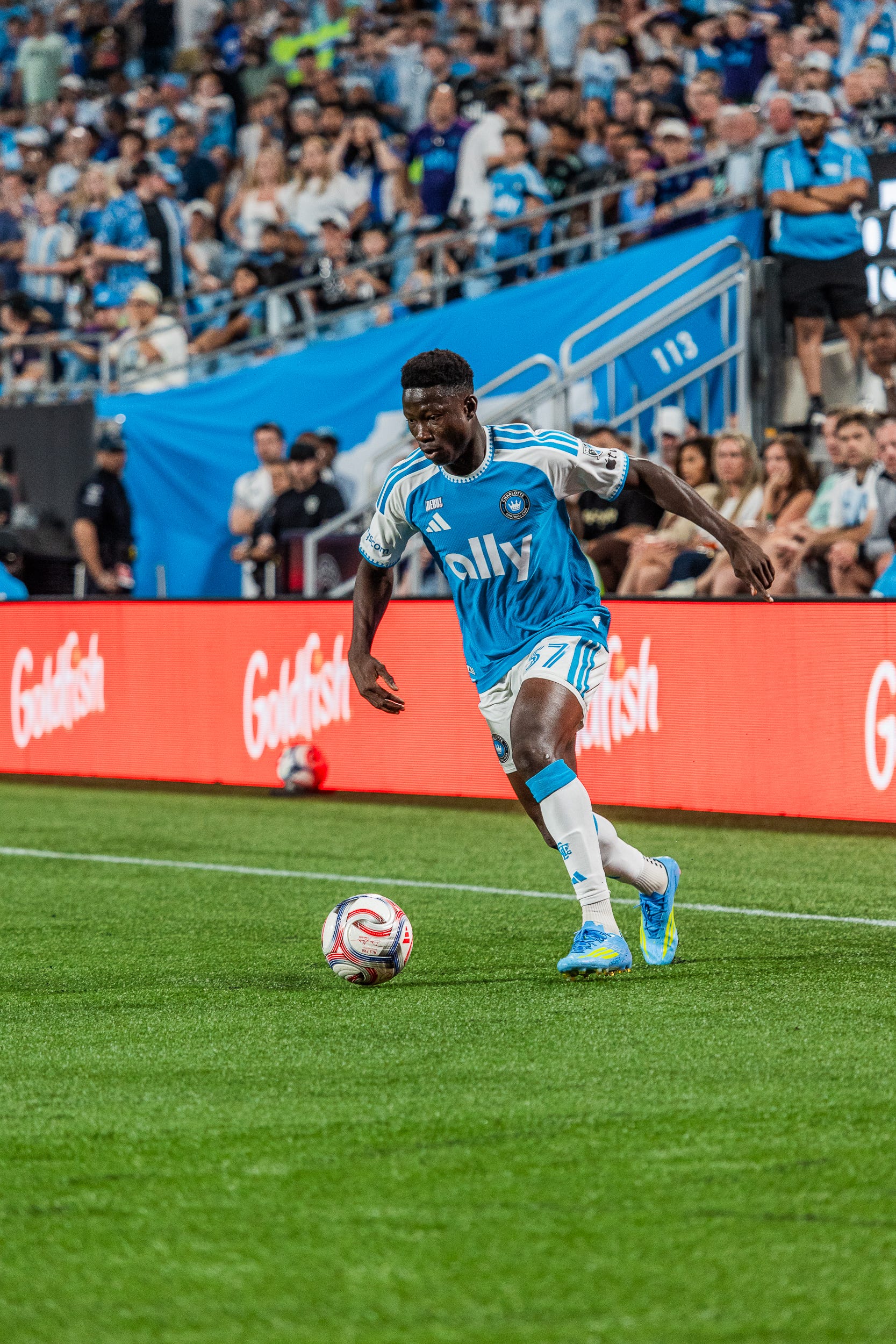
Yara al Bayyari, Seth Koch, Jake Sokol, Sam Spencer, and Jorge Torres contributed to this story.
